

Why Your Telecom Bills Are Bleeding Money
Imagine your company’s telecom budget is a bucket of water. You fill it every month, expecting it to keep your operations running smoothly. But this bucket is full of tiny, unseen holes. A slow drip here, a small leak there—individually, they seem harmless. Over time, these drips become a torrent, and you find your bucket half-empty without knowing why. This is the reality for most businesses struggling with unmanaged communication costs. The problem isn’t one big failure; it’s a slow, steady drain caused by complexity, neglect, and hidden fees.
Most finance and IT teams don’t have the time or specialized tools to pick apart hundreds of dense, jargon-filled invoices. Telecom vendors often benefit from this confusion. You might find duplicate charges for the same service, premium features nobody uses, or active services for employees who left months ago. These are the "phantom lines" and "zombie services" that silently drain your budget every single month.
The High Cost of Complexity and Inaction
The heart of the problem is that old-school expense tracking can't keep up with modern telecom services. A standard accounts payable review might catch a major invoice error, but it won't ask why you’re paying for 50 mobile data plans that have shown zero usage for six months. It won’t flag a contract that automatically renewed at a non-competitive rate two years ago. This lack of oversight creates a huge financial drag.
Common sources of this waste include:
- Billing Errors and Overcharges: Telecom invoices are notoriously full of mistakes, but finding them requires line-by-line audits that most teams simply can't perform.
- Unused or Underutilized Services: Companies frequently pay for services they no longer need, from old landlines in a forgotten storage closet to cloud software licenses assigned to former employees.
- Outdated Contract Terms: Without active management, contracts renew with unfavorable terms, locking businesses into high prices for old technology.
The sheer scale of this problem has fueled massive growth in the telecom expense management industry. As more companies wake up to these hidden costs, the demand for control has exploded. The global market is expected to grow from USD 4.09 billion in 2024 to USD 4.72 billion in 2025, an impressive 15.5% annual growth rate. This rapid expansion shows just how many organizations are now looking for ways to stop the bleeding, as detailed in this market analysis from Grand View Research.
Visualizing the Growth in TEM Demand
The chart below shows the strong upward trend in the telecom expense management market, reflecting the growing urgency for businesses to get their spending under control.

This visual evidence confirms that adopting telecom expense management is not just a passing fad but a critical business strategy for a growing number of companies worldwide. Without a dedicated system to manage this spending, your company is likely leaving a significant amount of money on the table—funds that could be put back into growth and new projects. The question is no longer if you are overspending, but by how much.
Understanding Telecom Expense Management Beyond The Buzzwords
Let's move past the jargon and explore what telecom expense management (TEM) actually does for a business. Think of it like hiring a specialized financial detective who focuses solely on your communication costs. This expert doesn't just glance at the final bill; they meticulously review every line item, check it against your active contracts, and hunt down any waste or overcharges. That’s the real job of a modern TEM solution—turning chaotic bill processing into strategic cost control.
Many businesses mistakenly believe TEM is just about paying invoices faster. While that's a benefit, true TEM goes much deeper. It’s the difference between blindly paying a bill and knowing exactly what you're paying for. It answers critical questions your finance team should be asking:
- Are we still paying for services at a location we closed last year?
- Do the 300 new mobile plans we added actually match employee usage, or are we overspending?
- Why did our data circuit costs jump by 15% this quarter without warning?
Without these answers, you're essentially steering your telecom budget with a blindfold on. A solid telecom expense management strategy gives you the visibility needed to make informed decisions instead of just reactive payments.
From Basic Tracking to Intelligent Optimization
The true power of TEM is unlocked when it moves from a reactive chore to a proactive strategy. Basic expense tracking is passive—you're just recording what you've already spent. Intelligent optimization is active—you analyze spending patterns to drive down future costs. This is achieved through a continuous cycle of auditing, analyzing, and acting on the data.
For instance, a simple invoice management tool might flag a bill that's higher than last month's. A complete TEM platform not only flags the increase but also pinpoints the exact cause—like a promotional rate expiring or data overages on specific lines—and recommends a more cost-effective plan. This analytical power turns raw billing data into actionable financial intelligence. You can learn more about how different communication services can be bundled for better rates and easier management.
A Look at the TEM Lifecycle
This diagram reveals the interconnected processes within a typical telecommunications expense management framework.
The image shows that TEM isn't a one-time task but a continuous cycle. It covers everything from sourcing and ordering services to processing invoices, auditing them for errors, and finally, optimizing for the future. This cyclical approach ensures that cost control becomes an ongoing business process, not just a one-off project.
Core Functions That Deliver Real Savings
To fully understand what a TEM solution does, it's helpful to break it down into its main functions. These components work together to build a complete system for managing all your communication expenses.
| Function | What It Does | Why It Matters |
|---|---|---|
| Invoice Auditing | Automatically scans every line of your telecom bills for errors, duplicate charges, and inconsistencies. | Research shows that up to 12% of telecom charges are due to billing errors. This function catches them before you overpay. |
| Inventory Management | Creates a centralized, up-to-date record of every device, circuit, and service your company uses. | Prevents paying for "phantom" services for ex-employees or closed offices and provides a clear view of all assets. |
| Usage Optimization | Analyzes how services are being consumed to identify waste, such as zero-use mobile lines or oversized data plans. | Ensures you only pay for what you actually need, aligning your telecom spending with real-world business activity. |
| Contract Management | Tracks all vendor agreements, renewal dates, and terms to prevent costly auto-renewals at unfavorable rates. | Gives you the leverage to negotiate better terms before a contract expires, helping to lock in lower prices. |
The Essential Components That Make TEM Actually Work
A successful telecom expense management solution works like a well-oiled machine, with each part contributing to drive efficiency and cut costs. It's not just one piece of software but an interconnected system built to bring order to the chaos of enterprise communications. At its heart, TEM turns hundreds of confusing vendor bills from a liability into a strategic asset. By breaking down the functions, you can see how it builds a complete picture of your telecom environment.
Invoice Processing and Auditing
The foundation of any solid TEM strategy is intelligent invoice processing and auditing. Think of this as the system's eyes and ears. Instead of someone manually digging through stacks of paper or dozens of PDF invoices, this component automates the intake and analysis. It carefully scans every single line item, a task that would be nearly impossible for most internal teams to handle.
This automated review is designed to catch the expensive mistakes that often slip by. Research shows that billing errors can eat up as much as 12% of a company's total telecom spending. This component flags issues such as:
- Duplicate charges for the same service.
- Incorrect rates that don’t match your contract.
- Fees for services that were never turned on or were previously canceled.
By catching these problems before a bill is paid, this function delivers an immediate return on investment and stops money from leaking out of your budget.
Asset and Inventory Management
Flowing directly from invoice data is asset and inventory management. This component acts as your company’s official digital catalog of every communication service and device you own. It answers the key question: "What do we actually have, where is it, and who is using it?" Without this, you're making decisions in the dark.
This centralized inventory gives you complete visibility, tracking everything from mobile phones and data plans to network circuits and cloud software licenses. It keeps you from paying for "zombie assets"—services still active for former employees or closed locations that keep generating monthly charges. An accurate inventory is critical for making smart optimization choices.
Contract and Vendor Management
Once you know what you have, the next step is making sure you’re paying the right price for it. Contract and vendor management is the negotiation powerhouse of your TEM system. It stores all your carrier agreements, keeps track of important dates like renewals, and compares your rates against industry standards. This forward-looking approach prevents you from getting stuck in costly auto-renewals with old, unfavorable terms.
Having all your contract data in one place gives you significant leverage when it's time to negotiate. It allows you to approach carriers with solid data, ensuring you get the best possible terms and pricing.
To help you understand how these components fit together, here’s a breakdown of their functions and the value they bring to a business.
| Component | Primary Function | Key Benefits | Business Impact |
|---|---|---|---|
| Invoice Processing & Auditing | Automates the intake and verification of all telecom bills against contract terms. | Catches billing errors, overcharges, and fraudulent fees before payment. | Immediately reduces operational costs and stops budget leakage. |
| Asset & Inventory Management | Creates a central, accurate database of all telecom assets (lines, devices, circuits). | Provides full visibility into what services are active, where they are, and who uses them. | Eliminates paying for unused "zombie" assets and improves resource allocation. |
| Contract & Vendor Management | Stores and manages all carrier contracts, tracking renewal dates and service level agreements (SLAs). | Benchmarks rates against the market and prevents unwanted auto-renewals. | Strengthens negotiating power with vendors and ensures favorable contract terms. |
| Usage Analytics & Optimization | Analyzes real-world consumption data to identify waste and opportunities for savings. | Identifies underutilized services, zero-usage lines, and right-sizing opportunities. | Aligns telecom spending with actual business needs and drives strategic cost reduction. |
As the table shows, each component builds on the last, creating a complete system that moves from tactical invoice checking to strategic optimization. This integrated approach is what delivers the full value of TEM.
Usage Analytics and Optimization
The final piece of the puzzle is usage analytics and optimization. This component shows you the truth about how your organization uses communication services. It separates essential tools from expensive waste by looking at real-world usage data. For example, it might spot a department with 100 mobile lines where 30% haven't been used for months.
This dashboard from a top TEM provider shows how platforms centralize visibility for quick analysis.
The screenshot demonstrates how a TEM solution pulls together spending, inventory, and order information into a single, actionable view. This lets managers spot trends and find savings. This is where a telecom expense management strategy goes from simply tracking costs to actively cutting them, making sure your investments support real business needs, not just vendor invoices.
Why Smart Companies Are Investing In TEM Solutions Now
The world of business communications has changed dramatically. Not long ago, managing these costs was as simple as tracking a few landlines and maybe some data circuits. Today, it's a tangled web where traditional phone systems, cloud services, and mobile devices all compete for budget, while remote work adds entirely new layers of expense. This complexity requires more than just a well-organized spreadsheet; it demands a dedicated management strategy.
Forward-thinking leaders see that delaying action on this growing complexity becomes more expensive with each passing month. Relying on manual processes is like trying to find your way through a bustling modern city using a crumpled paper map—it's slow, inefficient, and you're bound to miss the fastest routes. Companies that invest in telecom expense management solutions gain a significant advantage by transforming a chaotic cost center into a source of operational strength.
The Strategic Advantages of Early Adoption
Putting a TEM solution in place offers both immediate financial relief and long-term strategic benefits. Businesses that adopt these tools are capturing key advantages that set them apart from competitors still drowning in manual tracking and invoice reconciliation.
The primary benefits include:
- Improved Cash Flow and Cost Control: By automating invoice audits and flagging billing errors, companies immediately stop overpaying for services. This recovered money can be put back into core business activities, fueling growth instead of funding vendor mistakes.
- Enhanced Operational Efficiency: TEM platforms automate the tedious work of processing invoices, managing inventory, and tracking assets. This frees up IT and finance teams to work on strategic projects instead of administrative chores.
- Data-Driven Decision Making: Clear visibility into spending patterns allows leaders to make smarter choices about technology investments, vendor contracts, and how resources are used across the organization.
Gaining Control in a Complex Market
The need for better control over telecommunications costs has spurred broad adoption of advanced TEM solutions, particularly in large enterprises and fast-growing sectors like finance, healthcare, and manufacturing. While big companies have historically led the way, the rise of cloud-based and automated TEM platforms now makes these powerful tools accessible to small and medium-sized businesses. This shift shows a wider market understanding that managing telecom expenses is a critical business function. You can learn more about these market dynamics from recent industry analysis.
This dashboard from an IBM solution shows how modern TEM platforms create a central hub for overseeing every part of the telecom lifecycle.

The image clearly demonstrates how a single platform can pull together inventory data, expense reports, and usage analytics, giving managers a complete picture in one place. This consolidated view is exactly what smart companies are using to shift from simply reacting to problems to proactively optimizing their spending, ensuring every dollar invested in communications delivers real value.
Implementation Strategies That Actually Work
Successfully putting a telecom expense management program in place is about more than just switching on new software. It's a strategic move that combines people, processes, and technology to get lasting results. Think of it like a carefully planned construction project—you wouldn't start building without a blueprint, a solid foundation, and a skilled crew. A TEM implementation needs a clear plan to sidestep common issues and ensure it delivers on its promises.
The best rollouts start with a thorough initial audit. This first step gives you a baseline of your current spending and creates a complete inventory of every service and device. This audit often uncovers immediate cost-saving opportunities, like finding you’re still paying for phone lines in a long-closed office. Discovering these quick wins early on is powerful; it builds momentum and shows the value of the project to key leaders, getting them on board for the changes ahead.
Creating a Framework for Success
Once you have a clear picture of your current situation, the next step is building a solid governance structure. This isn't about creating red tape; it's about defining who does what. Who has the authority to approve new services? Who handles vendor relationships? Who tracks performance against cost-saving goals? Answering these questions creates a clear framework for managing your telecom environment proactively instead of just reacting to problems.
Here's what an effective governance framework includes:
- Defining Clear Policies: Set rules for buying devices, requesting services, and the personal use of company assets.
- Assigning Ownership: Give specific individuals or teams responsibility for different parts of the TEM lifecycle, from approving invoices to negotiating contracts.
- Setting Performance Metrics: Create measurable Key Performance Indicators (KPIs) to track success, such as "reduce unassigned mobile lines by 50% in six months" or "cut invoice processing time by 75%."
This organized approach turns telecom management from a scattered, chaotic task into a disciplined business function. It makes sure everyone understands their role in controlling costs and getting the most value. This is especially important for complex assets like a comprehensive business phone system, where clear policies can prevent overspending on features you don't need.
Managing the Human Element of Change
A new TEM system will inevitably change how people do their jobs. The finance team might go from manual data entry to automated invoice processing. Department managers may have to follow a new process for requesting mobile devices. This shift requires careful change management. Without it, you risk low adoption and pushback from employees who are used to the old ways.
The solution is communication and training. Explain why the changes are happening, focusing on the benefits for both the company and individual teams, like less administrative work and better budget control. Provide hands-on training to make sure everyone is comfortable with the new tools and understands the new workflows. This approach helps turn potential resistance into active support, ensuring the new processes stick around for the long haul.
To help visualize this journey, the table below outlines a typical implementation timeline, breaking down each phase into manageable steps with clear deliverables.
| Phase | Duration | Key Activities | Expected Outcomes | Success Metrics |
|---|---|---|---|---|
| Phase 1: Discovery & Audit | 2-4 Weeks | Collect all telecom invoices, contracts, and asset lists. Conduct a full inventory audit of services and devices. Identify initial "quick win" savings. | A complete, accurate inventory of all telecom assets. A clear baseline of current spending. | 100% of invoices and contracts collected. At least 3-5 quick-win savings opportunities identified. |
| Phase 2: Planning & Design | 1-2 Weeks | Define governance policies and roles. Set KPIs and savings targets. Select and configure the TEM platform. Plan the rollout schedule. | A documented governance framework. Agreed-upon KPIs. A finalized implementation plan. | Governance policy signed off by stakeholders. 95% agreement on KPIs. |
| Phase 3: Implementation & Training | 4-8 Weeks | Deploy the TEM software. Migrate data into the new system. Train all user groups (finance, IT, managers). Go live with new workflows. | TEM platform is fully operational. All users are trained and confident. New processes are active. | 90%+ user-training completion rate. Successful processing of the first invoice cycle in the new system. |
| Phase 4: Optimization & Monitoring | Ongoing | Continuously monitor spending against KPIs. Conduct regular audits and contract reviews. Refine policies as needed. Report on savings and performance. | Sustained cost savings. Improved operational efficiency. Proactive management of telecom expenses. | Consistent achievement of savings targets. Reduction in invoice errors by 80% or more. |
This phased approach ensures a structured and successful rollout, moving from understanding your current state to achieving long-term, sustainable control over your telecom costs.
The Path to Sustainable Optimization
The infographic below shows the continuous cycle of a successful TEM strategy, moving from initial discovery to ongoing improvement.
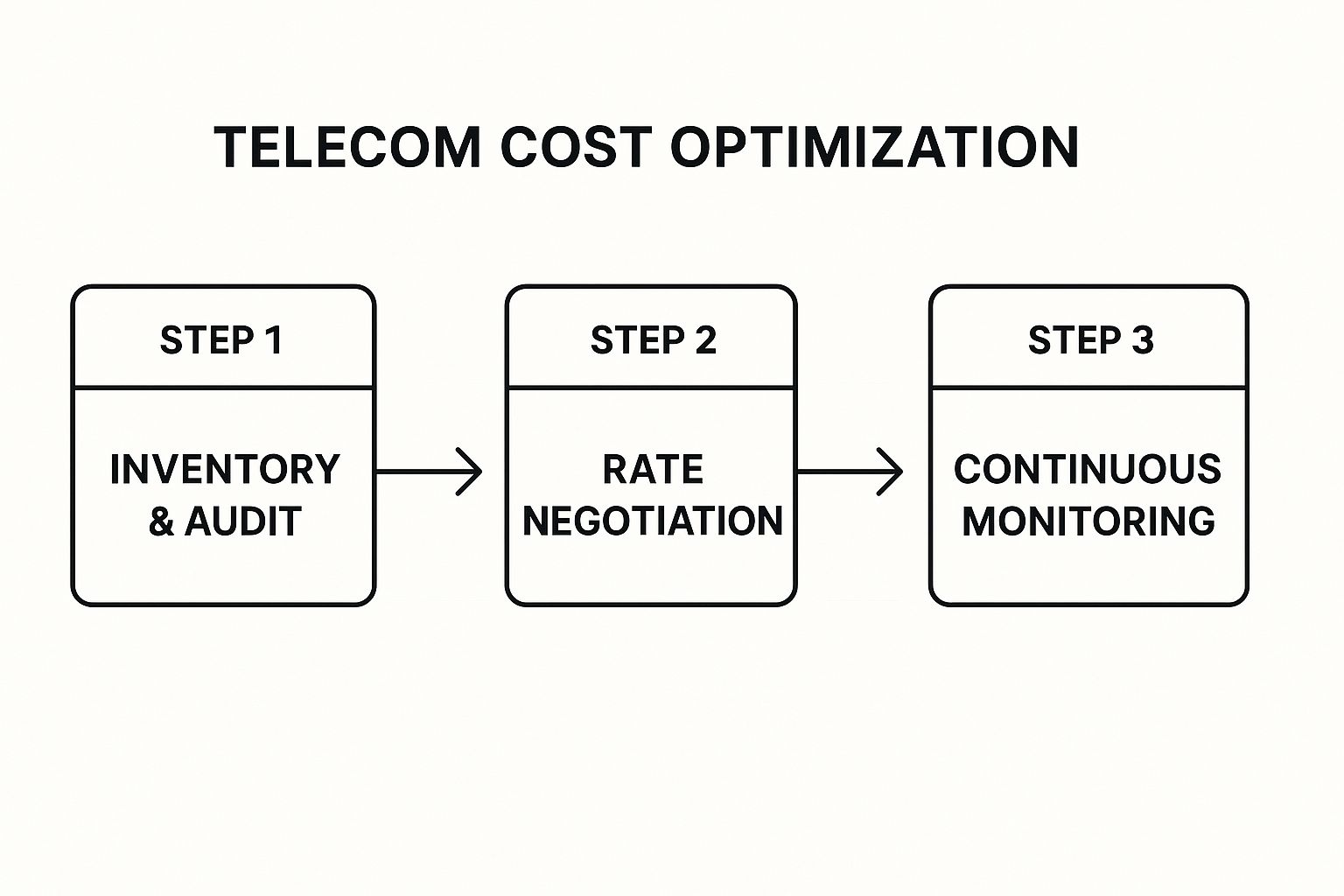
This flow shows that telecom expense management is not a one-time project but an ongoing cycle of improvement that delivers continuous value. By following a structured implementation plan that addresses technology, process, and people, companies can build a sustainable system that keeps delivering savings and efficiency long after the initial setup.
Choosing The Right TEM Solution For Your Business
Picking the right telecom expense management solution is a lot like choosing a specialized tool for a crucial job. You wouldn’t try to build a precision engine with a simple hammer, right? In the same way, the right TEM platform needs to match your business's size, complexity, and future plans. The market is full of options, from basic software for automating invoices to full-service partners who manage everything from vendor negotiations to mobile device lifecycles. The goal is to find the perfect fit without overpaying for features you'll never use.
Your search should start with a look in the mirror. What are your biggest headaches? Are you drowning in disorganized bills and constant invoice errors? Or is your main struggle managing a huge, sprawling inventory of mobile phones and IoT connections? Pinpointing your specific pain points is the first step toward finding a solution that actually solves them.
Key Evaluation Criteria for Your Shortlist
When you start comparing vendors, look past the slick presentations and get to the heart of what they offer. A methodical approach ensures you make a choice based on data, not just a good sales pitch.
Concentrate your evaluation on these make-or-break areas:
- Integration Capabilities: How well will the new solution play with your existing systems? A strong TEM platform must connect smoothly with your accounting software (like QuickBooks or SAP), HR systems, and IT service management (ITSM) platforms. This connection is key to preventing data bottlenecks and creating seamless workflows.
- Scalability and Flexibility: Your business isn't static, and your TEM solution shouldn't be either. Ask potential vendors how their platform can grow with you. Can it handle a surge in service volume, an expansion into new countries, or the adoption of new tech like 5G and IoT?
- User Experience (UX): A powerful tool is worthless if your team can't figure out how to use it. The platform needs to have intuitive dashboards, easy-to-read reports, and straightforward processes. If your IT and finance teams struggle to get the information they need, the tool’s value drops dramatically.
- Reporting and Analytics: The best TEM solutions don't just spit out raw data; they provide clear, actionable insights. Look for customizable dashboards and reports that help you spot spending trends, find opportunities for optimization, and accurately forecast future expenses.
Vetting Vendors and Understanding Total Cost
Once you have a shortlist, it's time to dig deeper. Look for providers with a solid track record, glowing customer testimonials, and case studies that mirror your industry. The needs of a manufacturing company with intricate IoT networks are vastly different from a retail chain focused on managing mobile point-of-sale devices. For businesses with very specific needs, looking into custom telecom solutions can often yield a much better fit than a one-size-fits-all product.
Review platforms are a great place to see what real users are saying about different TEM services.
Websites like this provide peer-driven feedback that can confirm or challenge a vendor's claims about their service and platform. These reviews often reveal how a solution performs in the real world, which is vital information.
Finally, think about the Total Cost of Ownership (TCO), not just the initial price tag. A cheaper solution might come loaded with hidden implementation fees, demand more of your staff's time to manage, or lack the powerful auditing tools that find big savings. A more expensive, fully managed service could deliver a much higher return on investment by freeing up your internal teams and uncovering more significant cost reductions. A careful TCO analysis gives you the complete financial picture and helps you choose the solution with the best long-term value for your business.
Your Action Plan For Telecom Expense Management Success
Knowing what to do is one thing, but putting that knowledge into action is what will finally get your company’s communication budget under control. The journey to effective telecom expense management starts with an honest look at where you are right now. Identify your biggest headaches—are you wrestling with painfully slow invoice processing, a total lack of visibility into spending, or just a nagging feeling that you’re not getting the real value from your telecom services? Real success begins by setting clear goals and having realistic expectations for what TEM can accomplish for your business.
This guide is your blueprint for moving from simply being aware of the problem to actively implementing a solution. We'll break the process into straightforward steps, helping you rally internal support and define clear metrics to track your progress.
Step 1: Evaluate Your Readiness and Build the Business Case
Before you do anything else, you need a clear picture of your starting line. This means taking a high-level look at your current processes and costs. Grab a few recent telecom invoices from your biggest providers and identify your top five communication expenses. This simple exercise often shines a light on immediate savings opportunities and helps you build a strong business case for change.
To get key stakeholders on board, focus on the clear-cut benefits:
- Cost Savings: Show them the money. Project potential savings by pointing to industry benchmarks, which show companies often discover that up to 12% of their telecom charges come from billing errors alone.
- Operational Efficiency: Explain how automating manual, time-consuming tasks will free up your IT and finance teams to focus on more important, strategic work.
- Risk Reduction: Stress how having a central inventory of all your telecom assets strengthens security and compliance by keeping track of every single device and service.
This visual from Deloitte shows the essential pillars of a strong TEM program, highlighting the shift from basic cost-cutting to creating strategic value.
As the graphic shows, real TEM success comes from blending technology, process, and governance to produce lasting financial and operational improvements.
Step 2: Set Clear Objectives and Timelines
Now that you have support, it’s time to define what a "win" looks like. Your goals need to be specific and something you can actually measure. Ditch vague goals like "save money" and aim for concrete targets like "Reduce mobile spending by 15% within the first year" or "Eliminate all charges for unused services within six months."
Map out a realistic timeline that works with your company's schedule. A phased rollout is often the best strategy, as it lets you score some early victories and build momentum. You might start with a full audit to set your baseline, then move on to negotiating with vendors, and finally focus on ongoing optimization. This structured plan makes the entire process of adopting telecom expense management feel much less daunting and more achievable.
Ready to take control of your telecom spending and build a strategy that delivers real results? TelcoSolutions works with over 300 providers to find the perfect mix of services and tools to cut costs and boost efficiency for your business.