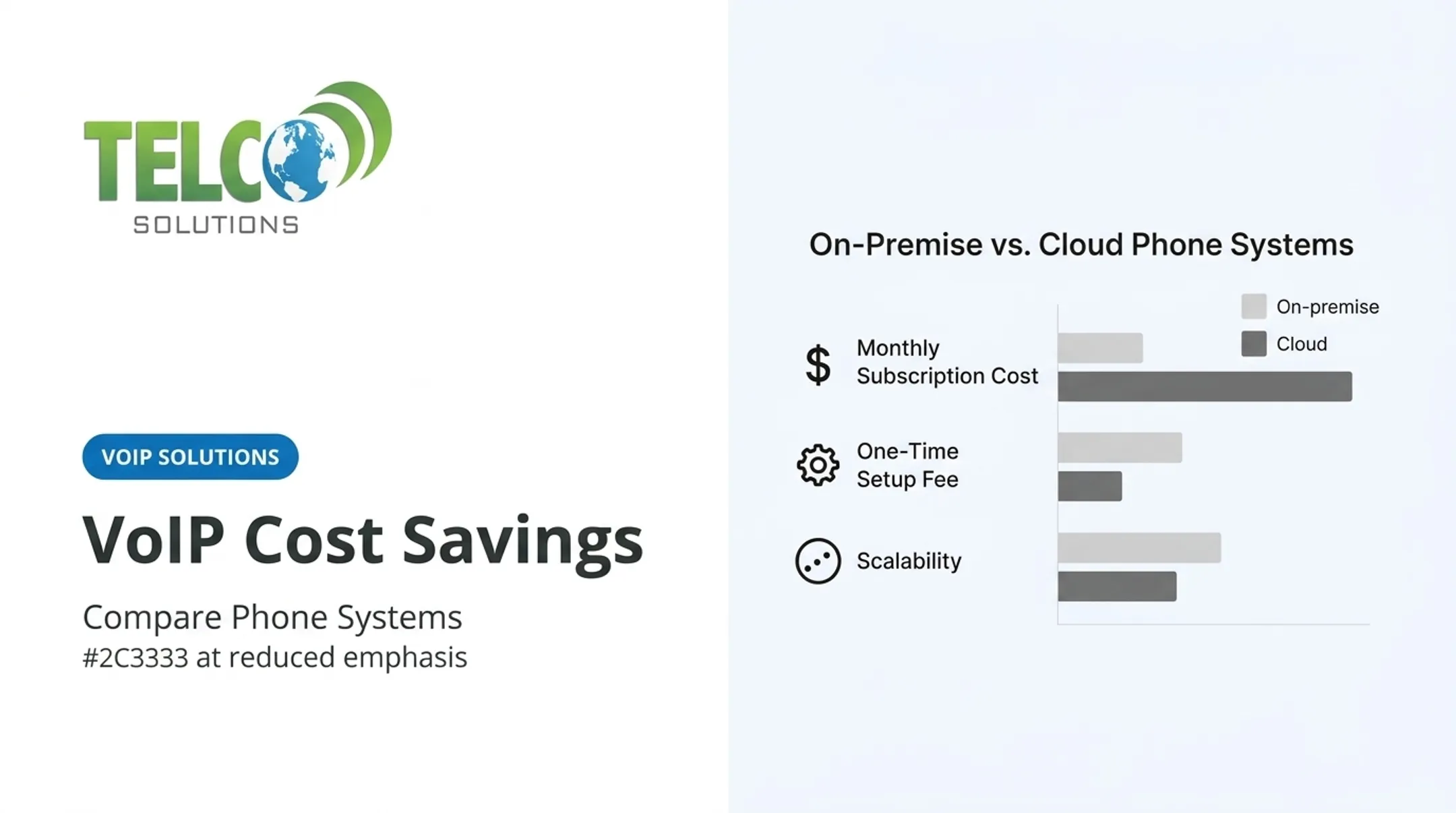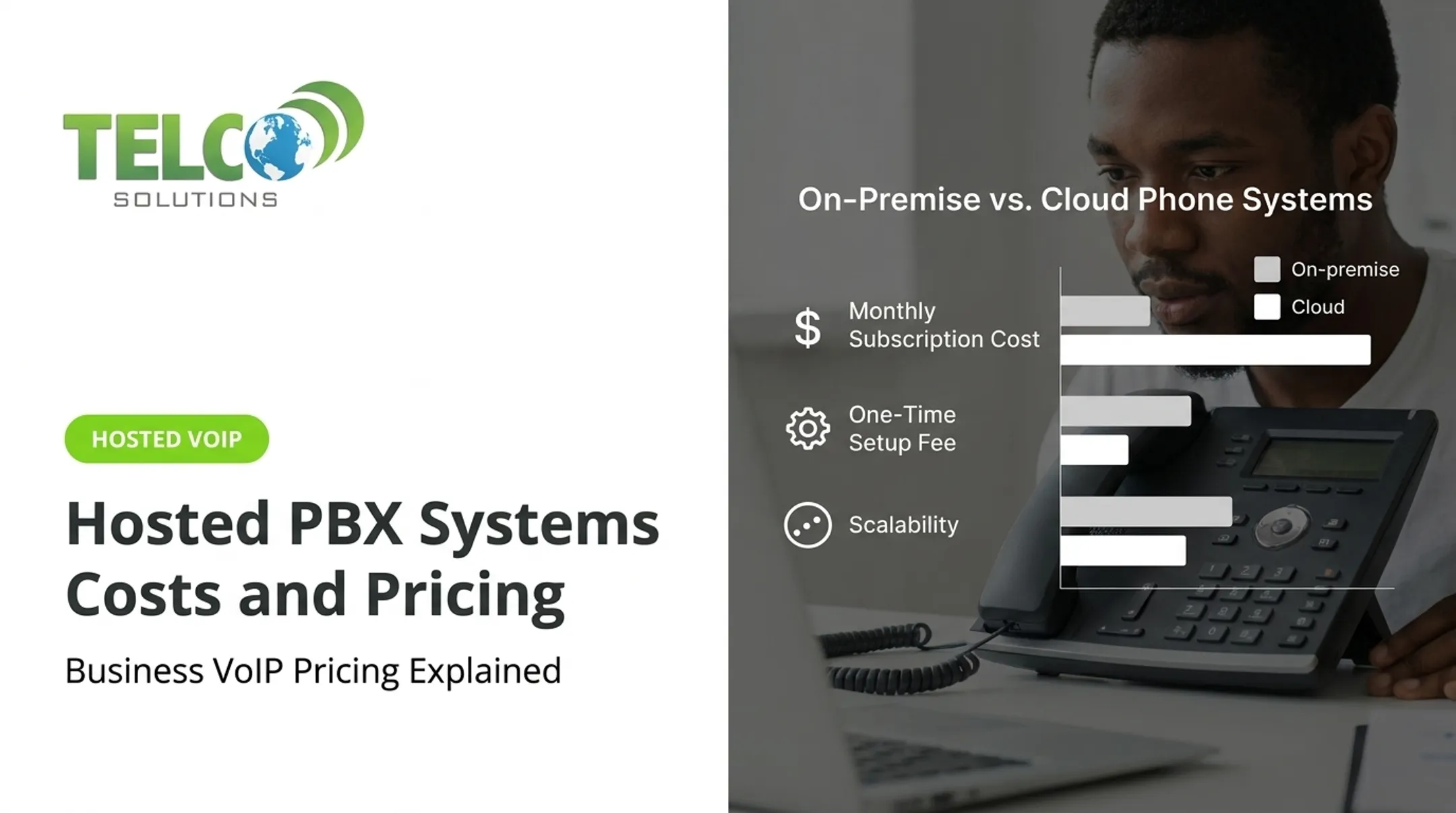

The real cost hinges on user count, call volume, features, devices, internet readiness, and how the contract is structured. Many providers advertise an attractive monthly rate that excludes equipment, taxes, and implementation, so the sticker price rarely tells the whole story.
This article breaks down current US pricing ranges, one-time versus recurring costs, the factors that move your budget, and a practical framework for estimating what you should actually spend.
TL;DR
- Cloud VoIP typically runs $15–$40 per user/month, with advanced tiers reaching $75 in some cases
- Factor in one-time costs: phones, porting, setup, and training
- Softphone-only teams stay lower; call-heavy or multi-site setups cost more
- Taxes and regulatory fees can add 20% or more to your base subscription
- Spend more only for reliability, security, or customer experience—not extra features
How Much Does a Small Business Phone System Cost? (Pricing Overview)
There's no fixed price for a reason: pricing structures vary by provider, and the same "$20/user" plan can mean very different things depending on what's bundled. That's why comparing total first-year cost, not just the advertised monthly rate, matters more than headline pricing.
Typical Cost Ranges
Most companies in major US cities pay $20–$40 per user per month for business VoIP, according to a 2025 industry pricing guide. Industry-wide, subscriptions run $10–$50+ per user/month depending on tier:
- Entry-level ($15–$25/user/month): Calling, voicemail, SMS, mobile app, basic auto-attendant
- Mid-range ($25–$40/user/month): Adds video meetings, call queues, CRM integrations, analytics
- Advanced (up to $75/user/month): Call recording, AI features, advanced routing, compliance tools
Metered plans work differently. Expect a $10–$25 base fee plus per-minute usage charges. This model suits businesses with low or unpredictable call volume.
Here's how the numbers play out for real-world scenarios:
| Business size | Plan type | Estimated monthly cost |
|---|---|---|
| Owner-run office (1-2 users) | Entry-level, per-user | $20–$50 |
| 5-10 user team | Mid-range, per-user | $125–$400 |
| 75-user growing business | Per-user + toll-free + international | ~$1,965 (base $1,875 + $40 toll-free + $50 international) |

Cloud VoIP vs. Landline vs. On-Premise PBX
| Deployment | Monthly cost | Upfront cost | Best fit |
|---|---|---|---|
| Cloud VoIP | $15–$40/user | Low (phones optional) | Growing teams, remote work |
| Traditional landline | $50–$100/line | Moderate | Internet-unreliable locations |
| On-premise PBX | Carrier costs separate | $1,000–$2,000/user | Businesses wanting local control |
A 50-employee business moving to on-premise PBX could face $10,000–$20,000 in hardware alone, plus 15-20% annual maintenance. Cloud VoIP eliminates that capital expense entirely. The only potential hardware cost is IP phones, and even that disappears if staff use softphone apps.

What published pricing usually excludes: taxes, E911 fees, phone hardware, headsets, porting fees, professional setup, cabling, and premium add-ons. Always ask for an itemized quote.
Key Factors That Affect the Cost
Your final price depends on six factors: system type, user and line counts, features, devices and network readiness, setup and training, and contract terms.
Type and Configuration
- Cloud VoIP/Hosted PBX: Low upfront cost, provider-managed maintenance, subscription pricing
- SIP trunking: Priced by channel (simultaneous call capacity), connects to existing on-premise PBX
- On-premise PBX: High upfront capital, requires in-house IT expertise
- Hybrid systems: Medium initial cost, blends control with flexibility
Many businesses start with SIP trunking to save money, then migrate to fully hosted systems as old hardware retires.
User Count, Extensions, and Call Paths
Don't assume you need one external line per employee. Distinguish between:
- User licenses (each employee's login/app access)
- Extensions (internal numbers)
- Simultaneous call paths (how many outside calls can happen at once)
A 20-person office rarely needs 20 simultaneous outside lines. Most calls come and go throughout the day, not all at once.
Features and Integrations
Auto-attendants, call queues, recording, and CRM integrations can bump you into a higher tier. Must-have basics like call forwarding and mobile app access are usually included in the base fee; advanced analytics and premium CRM connectors often cost extra.
Devices and Network Readiness
- Desk phones: $40–$350 per unit (a Poly VVX 250 lists anywhere from $59.99 on sale to $224.95 at MSRP)
- Headsets: roughly $30–$45 for wired entry models, more for wireless
- Conference phones: $159–$899 depending on room size and features
- Network upgrades (bandwidth, PoE switches, backup internet): often overlooked but essential for call quality

Zoom recommends 60–100 kbps per active voice call. Size your bandwidth for concurrent calls, not total headcount.
Installation, Migration, and Training
Setup typically runs $50–$200 for basic configuration and $500–$1,500 for comprehensive staff training. On-premise deployments fold installation into that larger $1,000–$2,000-per-user figure.
Usage, Contract, and Support
- Toll-free minutes and international calling often carry per-minute rates
- Month-to-month plans offer flexibility; annual contracts often unlock discounts
- Number porting typically costs $10–$30 per number, though some providers waive this fee
- FCC rules require simple ports to process in one business day, though providers may still charge porting fees
Cost Breakdown of a Small Business Phone System
Treat your budget as five separate buckets, not one monthly number.
Service, Licenses, Numbers, and Calling
Recurring, with occasional one-time activation fees. Itemize user licenses, DIDs, toll-free numbers, calling plans, E911 fees, and taxes. Regulatory surcharges alone can add 20% or more to your base bill.
Hardware and Accessories
Usually one-time, though leasing spreads cost monthly. Desk phones, headsets, and conference devices fall here. Softphone-only setups can skip this bucket entirely.
Installation, Configuration, and Migration
Primarily one-time. Covers call-flow setup, number porting, legacy system removal, and training. Future moves or new locations create fresh charges.
Internet, Network, Security, and Continuity
Mixed. One-time network upgrades (PoE switches, firewalls) plus recurring costs like backup internet. Most small businesses do fine with a 25–50 Mbps backup connection and a UPS covering the modem and router for short outages.
Maintenance, Add-Ons, and Lifecycle Changes
Recurring or periodic. Premium features, call-recording storage, seasonal capacity bumps, and adding users as you grow all land here.
First-year vs. ongoing: Your first year includes setup and hardware costs on top of subscriptions. Year two onward, you're typically paying just the recurring service fee plus any usage overages—often much lower.
How to Choose a Cost-Effective Small Business Phone System
Low-Cost vs. High-Cost Systems
The cheapest plan isn't always the least expensive choice long-term. Compare:
- Reliability: Look for providers offering up to 99.999% uptime guarantees with automatic failover during outages
- Security: End-to-end encryption for calls and messages
- Support: 24/7/365 access to real engineers, not just a call center queue
- Scalability: Ability to add or remove lines without long-term contract penalties
How to Estimate the Right Budget
Walk through this checklist before requesting quotes:
- Count your users and locations ( not just employees, but actual concurrent call needs)
- Inventory current numbers — which need porting, which are unused
- Estimate call volume — domestic, international, toll-free
- List required features — auto-attendant, CRM integration, recording
- Assess your network — bandwidth, backup internet, existing equipment
- Define contract flexibility — month-to-month vs. annual discount tradeoffs
Simple budgeting formula: Recurring licenses + calling costs + hardware + setup/porting + network upgrades + training + taxes + support + a contingency buffer. Treat any total as illustrative until a provider quotes your specifics.

If you're unsure where to start, TelcoSolutions can assess your existing phone systems and connectivity needs before recommending a tailored VoIP solution, with transparent implementation and ongoing support rather than a one-size-fits-all quote.
What Most Businesses Miss When Comparing Costs
Common blind spots include:
- Regulatory fees and E911 charges that aren't in the headline price
- Unused phone numbers still being billed
- International calling rates that spike unexpectedly
- Analog device replacement (fax lines, alarm systems)
- Downtime risk if you skip redundant internet
Always request an itemized quote that clearly separates what's included from what's extra.
Conclusion
Small business phone system costs depend on deployment type, user count, features, hardware, and support—so there is no single price that fits every shop. The right budget is not the lowest monthly fee; it balances affordability with reliability, security, and room to grow.
Compare itemized quotes side by side, match the deployment model to how your team actually works, and lock in contract terms you can live with before you sign.
Frequently Asked Questions
How much does a business phone system cost?
Total cost depends on system type, user count, features, and whether you buy phones or use apps. Cloud VoIP is usually the lowest ongoing path; on-premises gear raises upfront hardware and install spend. Treat published ranges as planning figures, not final quotes.
How much does a VoIP phone system cost?
Most plans run $15–$40 per user/month. Budget extra for desk phones ($40–$350 each) and setup ($50–$200) if you need them. Advanced feature packs can push service toward $75 per user/month.
How much does a phone line cost for a business?
A traditional landline runs $50–$100/month per line, while a VoIP line typically costs $15–$40 per user/month. Taxes, E911 fees, and calling plans affect the final number either way.
How much does a business phone cost?
A basic desk phone costs $40–$350 to buy outright, while leasing spreads that cost monthly. Many businesses skip hardware entirely using free softphone apps on existing devices.
How much does an automated phone system cost?
Auto-attendant and IVR features are usually bundled into standard VoIP subscriptions ($15–$40 per user/month). Custom scripting or multiple menu trees may require a separate quote.
What is the best business phone system for a small business?
Match the system to team size, call volume, mobility needs, and budget. Hosted VoIP fits most growing teams. Call-heavy or multi-site businesses often need stronger UCaaS features, reporting, and admin controls.